For beginners and Pros alike. Please enjoy
Chapter 1: Gear Essentials
Fishing starts with gear. You can have the best instincts, patience, and even luck, but without the right equipment, the water will humble you quickly. The beauty of fishing gear is that it balances science and art: rods engineered to bend just right, reels with precision drags, lines invisible beneath the water, and tackle boxes filled with lures that mimic nature’s design.
This chapter will walk you through everything you need to know about fishing gear — from rods and reels to tackle bags and accessories. Whether you’re brand new or upgrading after years of use, consider this your gear blueprint.
—
1.1 Understanding Rods
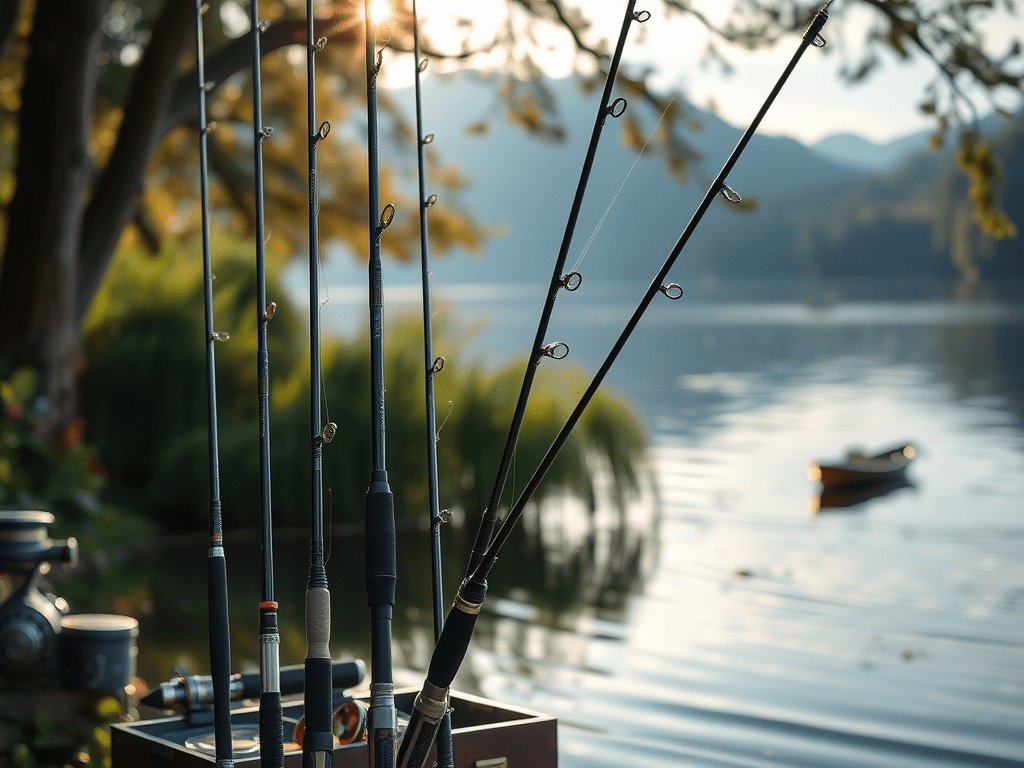
A fishing rod is your main tool — the extension of your arm and the messenger of underwater signals. It tells you when a fish is curious, when it’s nibbling, and when it’s committed to a strike.
Rod Length
Short rods (4’6”–6’): Better for tight spaces (creeks, docks, kayak fishing).
Medium length (6’–7’): Most versatile; perfect balance of casting distance and control.
Long rods (7’–9’): Great for surf casting, fly fishing, or covering water with long casts.
Tip: If you’re buying your first rod, aim for a 6’6” medium action spinning rod — the all-purpose workhorse.
Rod Power
Power describes how much force it takes to bend the rod.
Ultralight: Panfish, trout.
Light: Small bass, perch, crappie.
Medium: Versatile; bass, walleye, catfish.
Heavy: Pike, musky, big catfish.
Rod Action
Action is where and how quickly the rod bends.
Fast action: Bends near the tip → sensitive, good for single-hook lures.
Moderate: Bends more toward the middle → good for crankbaits and treble-hook lures.
Slow: Full bend → fun for panfish, but less hook-setting power.
Pro Story:
I once hooked a 12-pound carp on a light-action rod. It bent nearly double, and while I eventually landed it, the fight taught me a crucial lesson: choose the right power and action for your target species. The wrong rod can either snap under pressure or make the fight unnecessarily long.
—
1.2 Reels
The reel does more than store line. It controls casting, manages drag, and directly affects your success rate.
Reel Types
1. Spinning Reels
Best for beginners.
Handles light lines well.
Great for finesse fishing.
2. Baitcasting Reels
More advanced; precise control.
Ideal for heavier lures.
Steeper learning curve (backlash = tangled bird’s nest).
3. Spincast Reels
Push-button simplicity.
Good for kids or casual anglers.
Limited casting distance.
4. Fly Reels
Specially designed for fly fishing.
Simple mechanics but paired with unique rods/lines.
Pro Tip: Match reel size to rod size. A size 2500 spinning reel pairs well with a medium 6’6” rod for all-purpose fishing.
—
1.3 Fishing Line
Your line is the invisible connection between you and the fish. Each type has strengths and weaknesses.
Types of Fishing Line
Monofilament
Stretchy, forgiving, cheap.
Great for beginners.
Weak against abrasion.
Braid
Zero stretch, highly sensitive.
Extremely strong for diameter.
Can cut into rod guides if misused.
Fluorocarbon
Nearly invisible underwater.
Sinks (unlike mono).
Stiffer, more expensive.
Tip: Many pros use braid as main line + fluorocarbon leader. This combines strength with invisibility.
—
1.4 Hooks, Weights & Terminal Tackle
It’s easy to get distracted by flashy lures, but terminal tackle is the backbone of any setup.
Hooks: Ranging from tiny #12 for panfish to 5/0 for bass.
Weights/Sinkers: Worm weights for Texas rigs, split-shot for finesse, egg sinkers for catfish rigs.
Swivels: Prevent line twist, allow quick leader changes.
Floats/Bobbers: Perfect for beginners; suspends bait at desired depth.
—
1.5 Lures & Baits (Brief Overview)
While we’ll deep dive into lures in Chapter 2, every tackle box should have:
Soft plastics (worms, grubs, tubes)
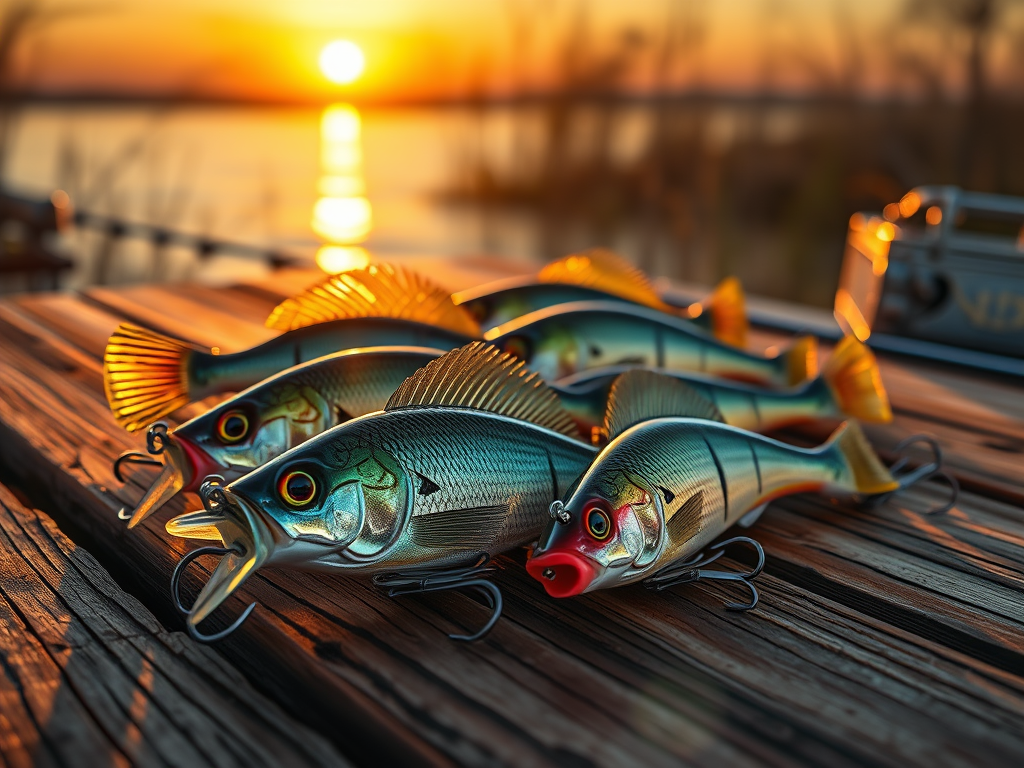
Crankbaits (diving to various depths)
Spinnerbaits & buzzbaits
Jigs (versatile, customizable)
Pro Tip: Don’t overload your box. Master a handful of lures first. Confidence matters more than variety.
—
1.6 Tackle Bags & Boxes
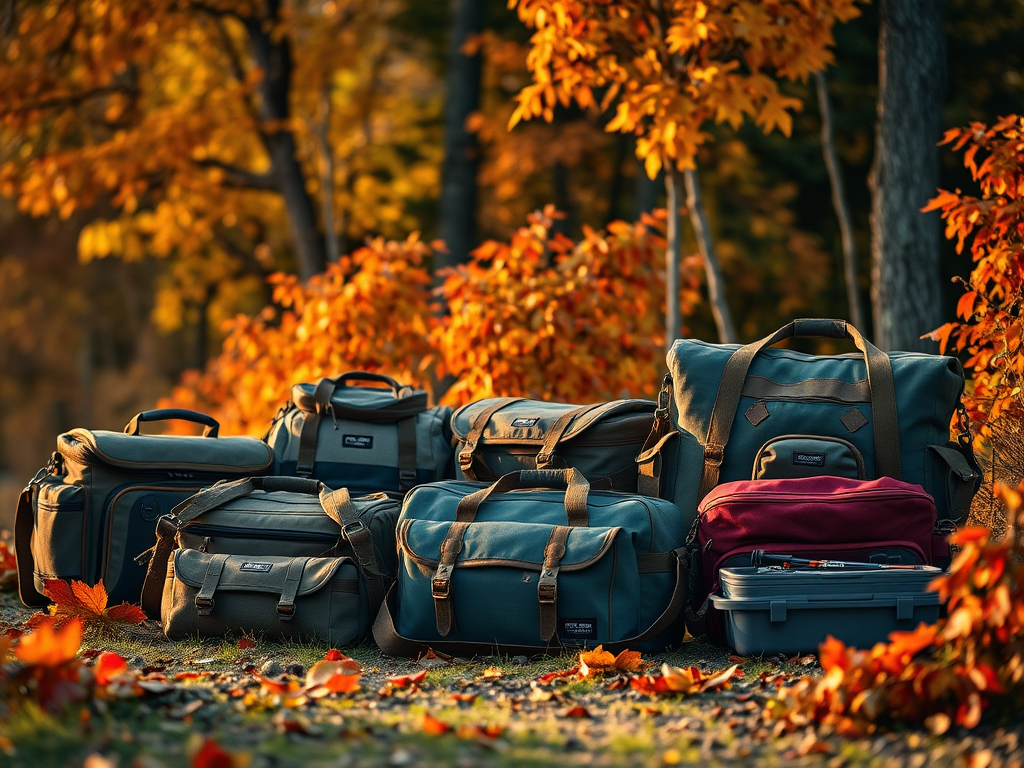
Organization is underrated. A cluttered bag wastes time; a well-organized one increases efficiency.
Bag Types
Shoulder Sling Bags: Great for bank walking.
Backpacks: Hands-free, more storage.
Hard Boxes: Classic trays, excellent for boats.
Features to Look For
Waterproof material.
Multiple compartments.
Comfortable straps.
Quick-access pouches.
Personal Note:
I once lost a half-day trip digging through an unorganized backpack. After upgrading to a modular tackle backpack, my efficiency doubled.
—
1.7 Essential Tools
No angler should hit the water without these:
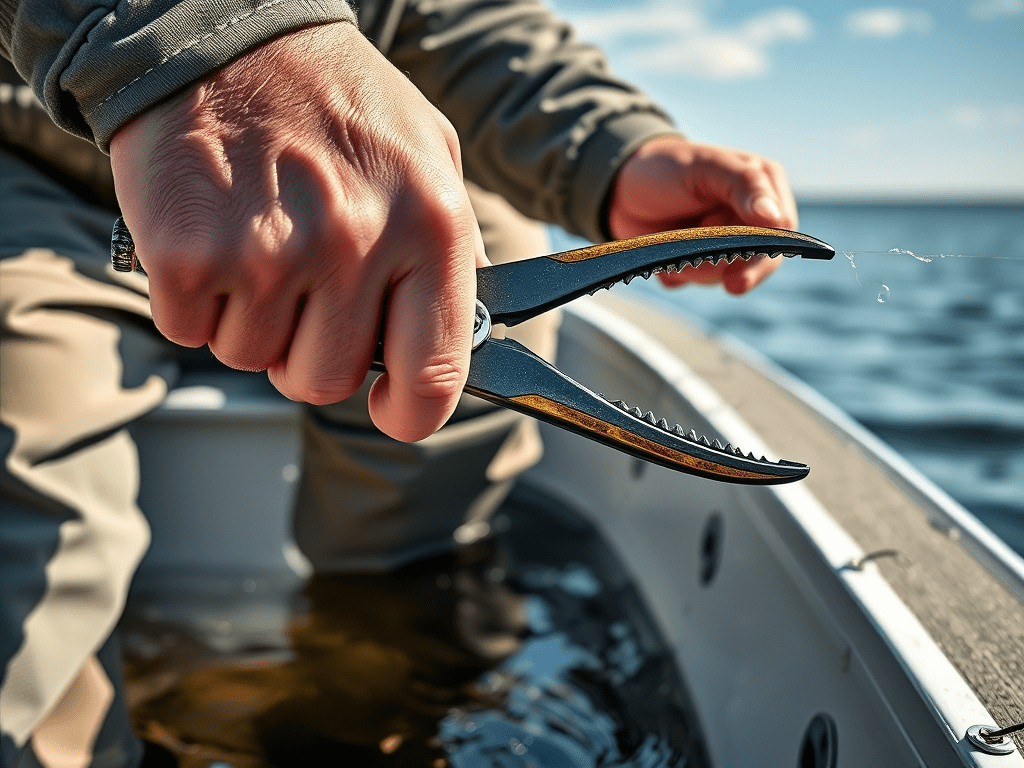
Needle-nose pliers: Unhooking fish safely.
Line cutters: Sharp scissors or clippers.
Landing net: Especially for catch-and-release.
Polarized sunglasses: See through glare, spot fish.
Measuring tape/scale: Track catches for records.
—
1.8 Safety & Comfort Gear
Fishing isn’t just about catching fish — it’s about doing it safely and comfortably.
Life jacket (especially on boats/kayaks).
Sunscreen & hat.
Rain gear.
First aid kit.
Plenty of water/snacks.
—
1.9 Beginner’s All-in-One Setup
If you’re overwhelmed, here’s a ready-made combo:
Rod: 6’6” medium spinning rod.
Reel: Size 2500 spinning reel.
Line: 8–10 lb monofilament.
Tackle: Hooks (sizes 2–2/0), split-shot, bobbers, soft plastics, a couple crankbaits.
Bag: Small tackle backpack with trays.
This one setup can catch bass, panfish, catfish, and trout in most freshwater settings.
—
1.10 Pro Tips for Upgrading Gear
Don’t buy everything at once — upgrade piece by piece.
Spend more on rod/reel than tackle at first.
Try other anglers’ gear before purchasing.
Watch for seasonal sales (spring & fall).
Maintain gear: rinse after saltwater use, re-spool line yearly.
—
Chapter Summary
Gear is the fisherman’s foundation. Rods, reels, and lines form your core setup. Tackle bags, tools, and accessories keep you efficient and prepared. Safety and comfort gear protect your health so you can fish longer and better.
Whether you’re a weekend angler or a future pro, mastering your gear means fewer frustrations and more fish in the net.
Chapter 2: Lures & Baits
Fishing lures and baits are the language we use to “speak” to fish. Each design, wiggle, color, and vibration sends a message underwater: food, danger, or curiosity. Choosing the right lure is both art and science — it requires understanding the fish, the conditions, and your own confidence as an angler.
This chapter is your complete playbook on lures and baits. We’ll explore the top choices for bass, crappie, catfish, and panfish, how to work them, and when live bait beats artificial.
—
2.1 Why Lures Matter
The wrong lure in the right place might get ignored, but the right lure at the right time can turn an ordinary day into one you’ll never forget. Lures are designed to:
Mimic natural prey (shad, crawfish, insects).
Trigger instinctual strikes (movement, flash, vibration).
Cover water quickly (search baits).
Target specific depths (surface, mid, deep).
Confidence is key. An angler fishing confidently with a simple jig often outperforms someone second-guessing with a $20 lure.
—
2.2 The Anatomy of a Lure
Every lure, no matter how flashy, shares a few core design elements:
Action: How it moves underwater (wiggle, wobble, dart).
Profile: The shape/size — does it look like a shad, worm, or frog?
Color: Visibility depends on water clarity & light conditions.
Sound/Vibration: Some lures rattle, thump, or buzz to attract fish.
—
2.3 The Top 10 Bass Lures
Bass are America’s favorite sport fish, and for good reason — aggressive, adaptable, and widespread. Here’s the ultimate top 10 bass lure list every angler should know:
1. Plastic Worms
Rigged Texas, Carolina, or Wacky style.
Works year-round; deadly during summer.
Natural, subtle action bass can’t resist.
2. Crankbaits
Mimic fleeing baitfish.
Choose lip size to control depth (squarebill = shallow, deep diver = 12+ feet).
Excellent for covering water fast.
3. Spinnerbaits
Vibrating blades create flash & thump.
Great in stained water.
Can be slow-rolled or burned fast.
4. Jigs
Extremely versatile (swim jigs, flipping jigs, finesse jigs).
Pair with soft plastic trailers.
Weedless, perfect for heavy cover.
5. Topwater Frogs
Ideal for lily pads, weeds.
Walk-the-frog retrieves trigger explosive strikes.
Best in summer mornings/evenings.
6. Swimbaits
Mimic shad or bluegill.
Ranging from small paddle-tails to giant glide baits.
Trophy hunters’ go-to lure.
7. Buzzbaits
Loud, surface-commotion lures.
Excellent for shallow water in low light.
8. Lipless Crankbaits
Vibrating, sinking lures that work across the water column.
Good for locating fish quickly.
9. Stick Baits (Senko Style)
Simple soft plastics, deadly when weightless.
Perfect for finesse presentations.
10. Chatterbaits (Bladed Jigs)
Vibrating jigs with flash.
Excellent search baits for murky water.
Pro Tip: Always carry a mix of fast-moving “search lures” (crankbaits, chatterbaits) and slow, subtle ones (worms, jigs).
—
2.4 Crappie Lures
Crappie are called “papermouths” for their delicate bite. Matching your lure to their size and feeding habits is critical.
Jigs (1/16–1/32 oz): The #1 crappie lure. Tube jigs, marabou jigs, and curly-tail grubs all work.
Small Minnow Imitations: Plastic shad bodies on jig heads.
Spinners: Tiny beetle spins are killer in shallow spring waters.
Soft Plastics: Paddle-tails mimic fry or minnows.
Story: On a chilly spring morning, I fished a crappie school that ignored live minnows. Switching to a small white curly-tail jig, I filled my cooler in an hour. Sometimes, plastics beat live bait.
—
2.5 Catfish Baits
Catfish rely on smell and taste, so bait selection differs from visual predators like bass.
Cut Bait: Pieces of shad, skipjack, or bluegill.
Chicken Liver: Classic, effective, messy.
Prepared Stink Baits: Doughs or dips — smelly but effective.
Live Bait: Large bluegill or shad for monster flatheads.
—
2.6 Panfish Favorites
For bluegill, perch, and sunfish:
Live Worms: Timeless, unbeatable.
Small Jigs/Grubs: Under bobbers for suspended fish.
Tiny Crankbaits: Ultralight setups make panfish fights thrilling.
—
2.7 Live Bait vs. Artificial Lures
Live Bait Pros:
Natural scent & movement.
Effective for beginners.
Works year-round.
Artificial Lure Pros:
Reusable & less messy.
Cover more water.
Targeted presentation (depth/speed).
Many anglers combine both: lure fishing for active search, live bait when fish are stubborn.
—
2.8 Choosing Lure Colors
Clear Water: Natural colors (green pumpkin, shad, smoke).
Stained Water: Brights (chartreuse, orange).
Low Light: Black silhouettes for contrast.
Pro Rule: “Match the hatch” — use lures resembling local forage.
—
2.9 Presentation & Retrieve
The lure is only as good as how you work it. Retrieve styles include:
Steady retrieve: Crankbaits, spinners.
Stop-and-go: Triggers reaction strikes.
Jigging: Lift-drop action.
Walking the dog: Side-to-side topwater action.
Tip: Change speeds often. A pause often seals the deal.
—
2.10 Building a Starter Lure Box
For beginners, here’s a simple kit:
Pack of plastic worms.
Spinnerbait (white/chartreuse).
Shallow crankbait (squarebill).
Jig + trailers.
Topwater popper.
This covers nearly every freshwater scenario.
—
Chapter Summary
Lures and baits are more than tools — they’re your way of “talking” to fish. By understanding action, profile, color, and retrieval, you’ll unlock consistent success. Always mix proven classics (worms, jigs) with experimental lures (chatterbaits, swimbaits), and remember: confidence catches fish.
—
Chapter 3: Seasonal Fishing Strategies
Fish don’t follow calendars, but they do follow cycles. Water temperature, daylight length, spawning patterns, and food availability change with the seasons — and fish change with them. The key to year-round success is adapting your strategy, gear, and mindset to the conditions.
This chapter takes you through spring, summer, fall, and winter, explaining where fish go, what they eat, and how you can catch them.
—
3.1 The Science of Seasonal Fishing
At the heart of seasonal strategy is water temperature:
Cold water (<50°F): Slow metabolism, sluggish fish, finesse tactics needed.
Mild water (50–70°F): Peak activity — spawning, feeding.
Warm water (>70°F): Fish retreat to cooler, deeper areas or become nocturnal.
Understanding this rhythm makes you adaptable, not frustrated.
—
3.2 Spring: The Rebirth of Fishing
Spring is magic. After winter’s dormancy, fish emerge hungry and ready to spawn.
Bass in Spring
Pre-Spawn (late winter–early spring): Bass stage near points and flats. Use jerkbaits, spinnerbaits, lipless cranks.
Spawn (mid-late spring): Bass move shallow (2–6 ft). Sight fishing with soft plastics or jigs is deadly.
Post-Spawn: Bass recover but remain near beds. Topwater lures shine.
Crappie in Spring
Crappie spawn in shallow coves. Use small jigs under bobbers.
Minnow-tipped jigs often outperform plain plastics.
Catfish in Spring
Active in warming shallows.
Cut shad and worms excel.
Tips for Spring Fishing
Look for warming bays that heat faster.
Afternoon is often better than morning.
Be patient with changing weather — cold fronts push fish deeper.
Story:
One April, I hit a small lake where bass were staging pre-spawn. Everyone was fishing shallow. I went deeper with a suspending jerkbait and landed my biggest largemouth of the year. Lesson? Fish don’t all move at once.
—
3.3 Summer: Heat & Strategy
Summer fishing can be frustrating. Hot weather pushes fish deep during the day, but rewards patient anglers at dawn, dusk, and night.
Bass in Summer
Early Morning: Topwater explosions with buzzbaits, frogs.
Midday: Fish deep ledges, drop-offs. Use Carolina rigs, deep crankbaits.
Night: Spinnerbaits, jigs, and topwater — cooler water = active bass.
Crappie in Summer
Suspend over deep brush piles.
Vertical jigging or trolling works well.
Catfish in Summer
Prime time for catfish!
Channel cats love stink bait.
Flatheads hit live bait at night.
Trout in Summer
Seek cool streams or tailwaters.
Early morning fly hatches = dry fly action.
Tips for Summer Fishing
Fish low light periods (dawn/dusk).
Go deeper as sun rises.
Night fishing = less pressure, cooler temps, more bites.
Pro Tip:
In midsummer, look for oxygenated water (dams, inflows). Fish stack there.
—
3.4 Fall: The Feeding Frenzy
Fall is one of the best fishing seasons. Fish sense winter coming and feed aggressively.
Bass in Fall
Shad migration into creeks drives bass shallow.
Crankbaits, spinnerbaits, and chatterbaits mimic schools of baitfish.
Topwater bite continues into early fall.
Crappie in Fall
Suspend along channel edges.
Small jigs in shad patterns excel.
Catfish in Fall
Feed heavily before winter.
Drift fishing with cut bait is productive.
Trout in Fall
Cooler water = active trout.
Spinners, spoons, and nymphs shine.
Tips for Fall Fishing
Follow the bait — where shad go, predators follow.
Vary lure size: match young-of-the-year baitfish.
Cover water quickly until you find schools.
Story:
In October, I fished a reservoir where bass chased shad into the backs of creeks. I tied on a squarebill crankbait and caught 20 fish in two hours. Fall is feast time — don’t miss it.
—
3.5 Winter: The Challenge
Winter separates casual anglers from true diehards. Cold water slows fish metabolism, but patience pays off.
Bass in Winter
Hold in deep structure (rock piles, ledges).
Use slow jigs, blade baits, and spoons.
Fish SLOW — often the difference is barely moving the bait.
Crappie in Winter
School in deep water.
Vertical jigging with small baits works.
Catfish in Winter
Often sluggish, but big blues feed in deep channels.
Use cut bait fished on bottom.
Trout in Winter
Thrive in cold water.
Nymphing and small jigs are effective.
Tips for Winter Fishing
Downsize lures.
Fish midday when water warms slightly.
Dress properly — safety is priority.
Pro Note:
One January, I caught my PB smallmouth on a blade bait jigged in 30 feet. It took 20 minutes between bites, but the reward was unforgettable.
—
3.6 Seasonal Gear Adjustments
Spring: Medium gear, natural colors, jerkbaits & plastics.
Summer: Deep crankbaits, Carolina rigs, night gear (black lures).
Fall: Fast-moving lures, shad imitations.
Winter: Finesse rods, light line, small baits.
—
3.7 Seasonal Mindset
Don’t fight nature — adapt to it.
Some days require grinding; others explode with action.
Every season teaches patience.
—
Chapter Summary
Seasons change, and so do fish. Mastering seasonal strategies means more consistent catches year-round. Spring offers spawning fish, summer demands deep or night tactics, fall brings feeding frenzies, and winter tests finesse.
When you learn to follow fish through their yearly cycle, you’ll stop blaming “bad luck” and start catching with purpose.
—
—
Chapter 4: Techniques & Tactics
Gear is your foundation, and lures are your language — but technique is the delivery. A rod, reel, and lure can’t catch fish by themselves. It’s how you present them, how you read the water, and how you adapt your retrieve that seals the deal.
This chapter covers core fishing techniques every angler should master, from the basics of casting to advanced methods like trolling and finesse fishing.
—
4.1 The Art of Casting
Casting seems simple until you try to drop a lure under a dock, 30 yards away, without snagging. Casting isn’t just about distance — it’s about accuracy, control, and angle.
Basic Casts
Overhead Cast: Most common; best for distance.
Sidearm Cast: Lower trajectory, great in wind or tight cover.
Underhand/Pitching: Short-range precision into cover.
Flipping: Quiet, controlled presentation for heavy cover.
Pro Tip: Always feather the line with your finger (spinning) or thumb (baitcaster) to slow the lure before splashdown. Quiet entries = more strikes.
—
4.2 Retrieves: Speaking the Fish’s Language
How you retrieve a lure can matter more than the lure itself.
Steady Retrieve: Crankbaits, spinnerbaits, swimbaits.
Stop-and-Go: Mimics injured prey. Deadly with crankbaits.
Lift-and-Drop (Yo-Yo): Lipless cranks, blade baits.
Walking the Dog: Zig-zagging topwater action.
Burning: Fast retrieve to trigger reaction bites.
Deadsticking: Letting soft plastics sit still — subtle but effective.
Story: I once fished a pond where bass ignored everything. Out of frustration, I let a worm sit motionless for 30 seconds. BOOM — biggest fish of the day. Sometimes doing “nothing” is the best retrieve.
—
4.3 Jigging
Jigging is one of the most versatile tactics across species.
Vertical Jigging: Drop lure under boat; lift and fall. Perfect for crappie, walleye.
Swimming Jigs: Steady retrieve like a swimbait.
Finesse Jigging: Light jigs with subtle trailers for pressured bass.
Ice Jigging: Small spoons or jigs for winter panfish.
Pro Tip: Always watch your line on the fall — many bites happen as the lure drops.
—
4.4 Topwater Tactics
Chapter 1: Gear Essentials
Fishing starts with gear. You can have the best instincts, patience, and even luck, but without the right equipment, the water will humble you quickly. The beauty of fishing gear is that it balances science and art: rods engineered to bend just right, reels with precision drags, lines invisible beneath the water, and tackle boxes filled with lures that mimic nature’s design.
This chapter will walk you through everything you need to know about fishing gear — from rods and reels to tackle bags and accessories. Whether you’re brand new or upgrading after years of use, consider this your gear blueprint.
—
1.1 Understanding Rods
A fishing rod is your main tool — the extension of your arm and the messenger of underwater signals. It tells you when a fish is curious, when it’s nibbling, and when it’s committed to a strike.
Rod Length
Short rods (4’6”–6’): Better for tight spaces (creeks, docks, kayak fishing).
Medium length (6’–7’): Most versatile; perfect balance of casting distance and control.
Long rods (7’–9’): Great for surf casting, fly fishing, or covering water with long casts.
Tip: If you’re buying your first rod, aim for a 6’6” medium action spinning rod — the all-purpose workhorse.
Rod Power
Power describes how much force it takes to bend the rod.
Ultralight: Panfish, trout.
Light: Small bass, perch, crappie.
Medium: Versatile; bass, walleye, catfish.
Heavy: Pike, musky, big catfish.
Rod Action
Action is where and how quickly the rod bends.
Fast action: Bends near the tip → sensitive, good for single-hook lures.
Moderate: Bends more toward the middle → good for crankbaits and treble-hook lures.
Slow: Full bend → fun for panfish, but less hook-setting power.
Pro Story:
I once hooked a 12-pound carp on a light-action rod. It bent nearly double, and while I eventually landed it, the fight taught me a crucial lesson: choose the right power and action for your target species. The wrong rod can either snap under pressure or make the fight unnecessarily long.
—
1.2 Reels
The reel does more than store line. It controls casting, manages drag, and directly affects your success rate.
Reel Types
1. Spinning Reels
Best for beginners.
Handles light lines well.
Great for finesse fishing.
2. Baitcasting Reels
More advanced; precise control.
Ideal for heavier lures.
Steeper learning curve (backlash = tangled bird’s nest).
3. Spincast Reels
Push-button simplicity.
Good for kids or casual anglers.
Limited casting distance.
4. Fly Reels
Specially designed for fly fishing.
Simple mechanics but paired with unique rods/lines.
Pro Tip: Match reel size to rod size. A size 2500 spinning reel pairs well with a medium 6’6” rod for all-purpose fishing.
—
1.3 Fishing Line
Your line is the invisible connection between you and the fish. Each type has strengths and weaknesses.
Types of Fishing Line
Monofilament
Stretchy, forgiving, cheap.
Great for beginners.
Weak against abrasion.
Braid
Zero stretch, highly sensitive.
Extremely strong for diameter.
Can cut into rod guides if misused.
Fluorocarbon
Nearly invisible underwater.
Sinks (unlike mono).
Stiffer, more expensive.
Tip: Many pros use braid as main line + fluorocarbon leader. This combines strength with invisibility.
—
1.4 Hooks, Weights & Terminal Tackle
It’s easy to get distracted by flashy lures, but terminal tackle is the backbone of any setup.
Hooks: Ranging from tiny #12 for panfish to 5/0 for bass.
Weights/Sinkers: Worm weights for Texas rigs, split-shot for finesse, egg sinkers for catfish rigs.
Swivels: Prevent line twist, allow quick leader changes.
Floats/Bobbers: Perfect for beginners; suspends bait at desired depth.
—
1.5 Lures & Baits (Brief Overview)
While we’ll deep dive into lures in Chapter 2, every tackle box should have:
Soft plastics (worms, grubs, tubes)
Crankbaits (diving to various depths)
Spinnerbaits & buzzbaits
Jigs (versatile, customizable)
Pro Tip: Don’t overload your box. Master a handful of lures first. Confidence matters more than variety.
—
1.6 Tackle Bags & Boxes
Organization is underrated. A cluttered bag wastes time; a well-organized one increases efficiency.
Bag Types
Shoulder Sling Bags: Great for bank walking.
Backpacks: Hands-free, more storage.
Hard Boxes: Classic trays, excellent for boats.
Features to Look For
Waterproof material.
Multiple compartments.
Comfortable straps.
Quick-access pouches.
Personal Note:
I once lost a half-day trip digging through an unorganized backpack. After upgrading to a modular tackle backpack, my efficiency doubled.
—
1.7 Essential Tools
No angler should hit the water without these:
Needle-nose pliers: Unhooking fish safely.
Line cutters: Sharp scissors or clippers.
Landing net: Especially for catch-and-release.
Polarized sunglasses: See through glare, spot fish.
Measuring tape/scale: Track catches for records.
—
1.8 Safety & Comfort Gear
Fishing isn’t just about catching fish — it’s about doing it safely and comfortably.
Life jacket (especially on boats/kayaks).
Sunscreen & hat.
Rain gear.
First aid kit.
Plenty of water/snacks.
—
1.9 Beginner’s All-in-One Setup
If you’re overwhelmed, here’s a ready-made combo:
Rod: 6’6” medium spinning rod.
Reel: Size 2500 spinning reel.
Line: 8–10 lb monofilament.
Tackle: Hooks (sizes 2–2/0), split-shot, bobbers, soft plastics, a couple crankbaits.
Bag: Small tackle backpack with trays.
This one setup can catch bass, panfish, catfish, and trout in most freshwater settings.
—
1.10 Pro Tips for Upgrading Gear
Don’t buy everything at once — upgrade piece by piece.
Spend more on rod/reel than tackle at first.
Try other anglers’ gear before purchasing.
Watch for seasonal sales (spring & fall).
Maintain gear: rinse after saltwater use, re-spool line yearly.
—
Chapter Summary
Gear is the fisherman’s foundation. Rods, reels, and lines form your core setup. Tackle bags, tools, and accessories keep you efficient and prepared. Safety and comfort gear protect your health so you can fish longer and better.
Whether you’re a weekend angler or a future pro, mastering your gear means fewer frustrations and more fish in the net.
Chapter 2: Lures & Baits
Fishing lures and baits are the language we use to “speak” to fish. Each design, wiggle, color, and vibration sends a message underwater: food, danger, or curiosity. Choosing the right lure is both art and science — it requires understanding the fish, the conditions, and your own confidence as an angler.
This chapter is your complete playbook on lures and baits. We’ll explore the top choices for bass, crappie, catfish, and panfish, how to work them, and when live bait beats artificial.
—
2.1 Why Lures Matter
The wrong lure in the right place might get ignored, but the right lure at the right time can turn an ordinary day into one you’ll never forget. Lures are designed to:
Mimic natural prey (shad, crawfish, insects).
Trigger instinctual strikes (movement, flash, vibration).
Cover water quickly (search baits).
Target specific depths (surface, mid, deep).
Confidence is key. An angler fishing confidently with a simple jig often outperforms someone second-guessing with a $20 lure.
—
2.2 The Anatomy of a Lure
Every lure, no matter how flashy, shares a few core design elements:
Action: How it moves underwater (wiggle, wobble, dart).
Profile: The shape/size — does it look like a shad, worm, or frog?
Color: Visibility depends on water clarity & light conditions.
Sound/Vibration: Some lures rattle, thump, or buzz to attract fish.
—
2.3 The Top 10 Bass Lures
Bass are America’s favorite sport fish, and for good reason — aggressive, adaptable, and widespread. Here’s the ultimate top 10 bass lure list every angler should know:
1. Plastic Worms
Rigged Texas, Carolina, or Wacky style.
Works year-round; deadly during summer.
Natural, subtle action bass can’t resist.
2. Crankbaits
Mimic fleeing baitfish.
Choose lip size to control depth (squarebill = shallow, deep diver = 12+ feet).
Excellent for covering water fast.
3. Spinnerbaits
Vibrating blades create flash & thump.
Great in stained water.
Can be slow-rolled or burned fast.
4. Jigs
Extremely versatile (swim jigs, flipping jigs, finesse jigs).
Pair with soft plastic trailers.
Weedless, perfect for heavy cover.
5. Topwater Frogs
Ideal for lily pads, weeds.
Walk-the-frog retrieves trigger explosive strikes.
Best in summer mornings/evenings.
6. Swimbaits
Mimic shad or bluegill.
Ranging from small paddle-tails to giant glide baits.
Trophy hunters’ go-to lure.
7. Buzzbaits
Loud, surface-commotion lures.
Excellent for shallow water in low light.
8. Lipless Crankbaits
Vibrating, sinking lures that work across the water column.
Good for locating fish quickly.
9. Stick Baits (Senko Style)
Simple soft plastics, deadly when weightless.
Perfect for finesse presentations.
10. Chatterbaits (Bladed Jigs)
Vibrating jigs with flash.
Excellent search baits for murky water.
Pro Tip: Always carry a mix of fast-moving “search lures” (crankbaits, chatterbaits) and slow, subtle ones (worms, jigs).
—
2.4 Crappie Lures
Crappie are called “papermouths” for their delicate bite. Matching your lure to their size and feeding habits is critical.
Jigs (1/16–1/32 oz): The #1 crappie lure. Tube jigs, marabou jigs, and curly-tail grubs all work.
Small Minnow Imitations: Plastic shad bodies on jig heads.
Spinners: Tiny beetle spins are killer in shallow spring waters.
Soft Plastics: Paddle-tails mimic fry or minnows.
Story: On a chilly spring morning, I fished a crappie school that ignored live minnows. Switching to a small white curly-tail jig, I filled my cooler in an hour. Sometimes, plastics beat live bait.
—
2.5 Catfish Baits
Catfish rely on smell and taste, so bait selection differs from visual predators like bass.
Cut Bait: Pieces of shad, skipjack, or bluegill.
Chicken Liver: Classic, effective, messy.
Prepared Stink Baits: Doughs or dips — smelly but effective.
Live Bait: Large bluegill or shad for monster flatheads.
—
2.6 Panfish Favorites
For bluegill, perch, and sunfish:
Live Worms: Timeless, unbeatable.
Small Jigs/Grubs: Under bobbers for suspended fish.
Tiny Crankbaits: Ultralight setups make panfish fights thrilling.
—
2.7 Live Bait vs. Artificial Lures
Live Bait Pros:
Natural scent & movement.
Effective for beginners.
Works year-round.
Artificial Lure Pros:
Reusable & less messy.
Cover more water.
Targeted presentation (depth/speed).
Many anglers combine both: lure fishing for active search, live bait when fish are stubborn.
—
2.8 Choosing Lure Colors
Clear Water: Natural colors (green pumpkin, shad, smoke).
Stained Water: Brights (chartreuse, orange).
Low Light: Black silhouettes for contrast.
Pro Rule: “Match the hatch” — use lures resembling local forage.
—
2.9 Presentation & Retrieve
The lure is only as good as how you work it. Retrieve styles include:
Steady retrieve: Crankbaits, spinners.
Stop-and-go: Triggers reaction strikes.
Jigging: Lift-drop action.
Walking the dog: Side-to-side topwater action.
Tip: Change speeds often. A pause often seals the deal.
—
2.10 Building a Starter Lure Box
For beginners, here’s a simple kit:
Pack of plastic worms.
Spinnerbait (white/chartreuse).
Shallow crankbait (squarebill).
Jig + trailers.
Topwater popper.
This covers nearly every freshwater scenario.
—
Chapter Summary
Lures and baits are more than tools — they’re your way of “talking” to fish. By understanding action, profile, color, and retrieval, you’ll unlock consistent success. Always mix proven classics (worms, jigs) with experimental lures (chatterbaits, swimbaits), and remember: confidence catches fish.
—
Chapter 3: Seasonal Fishing Strategies
Fish don’t follow calendars, but they do follow cycles. Water temperature, daylight length, spawning patterns, and food availability change with the seasons — and fish change with them. The key to year-round success is adapting your strategy, gear, and mindset to the conditions.
This chapter takes you through spring, summer, fall, and winter, explaining where fish go, what they eat, and how you can catch them.
—
3.1 The Science of Seasonal Fishing
At the heart of seasonal strategy is water temperature:
Cold water (<50°F): Slow metabolism, sluggish fish, finesse tactics needed.
Mild water (50–70°F): Peak activity — spawning, feeding.
Warm water (>70°F): Fish retreat to cooler, deeper areas or become nocturnal.
Understanding this rhythm makes you adaptable, not frustrated.
—
3.2 Spring: The Rebirth of Fishing
Spring is magic. After winter’s dormancy, fish emerge hungry and ready to spawn.
Bass in Spring
Pre-Spawn (late winter–early spring): Bass stage near points and flats. Use jerkbaits, spinnerbaits, lipless cranks.
Spawn (mid-late spring): Bass move shallow (2–6 ft). Sight fishing with soft plastics or jigs is deadly.
Post-Spawn: Bass recover but remain near beds. Topwater lures shine.
Crappie in Spring
Crappie spawn in shallow coves. Use small jigs under bobbers.
Minnow-tipped jigs often outperform plain plastics.
Catfish in Spring
Active in warming shallows.
Cut shad and worms excel.
Tips for Spring Fishing
Look for warming bays that heat faster.
Afternoon is often better than morning.
Be patient with changing weather — cold fronts push fish deeper.
Story:
One April, I hit a small lake where bass were staging pre-spawn. Everyone was fishing shallow. I went deeper with a suspending jerkbait and landed my biggest largemouth of the year. Lesson? Fish don’t all move at once.
—
3.3 Summer: Heat & Strategy
Summer fishing can be frustrating. Hot weather pushes fish deep during the day, but rewards patient anglers at dawn, dusk, and night.
Bass in Summer
Early Morning: Topwater explosions with buzzbaits, frogs.
Midday: Fish deep ledges, drop-offs. Use Carolina rigs, deep crankbaits.
Night: Spinnerbaits, jigs, and topwater — cooler water = active bass.
Crappie in Summer
Suspend over deep brush piles.
Vertical jigging or trolling works well.
Catfish in Summer
Prime time for catfish!
Channel cats love stink bait.
Flatheads hit live bait at night.
Trout in Summer
Seek cool streams or tailwaters.
Early morning fly hatches = dry fly action.
Tips for Summer Fishing
Fish low light periods (dawn/dusk).
Go deeper as sun rises.
Night fishing = less pressure, cooler temps, more bites.
Pro Tip:
In midsummer, look for oxygenated water (dams, inflows). Fish stack there.
—
3.4 Fall: The Feeding Frenzy
Fall is one of the best fishing seasons. Fish sense winter coming and feed aggressively.
Bass in Fall
Shad migration into creeks drives bass shallow.
Crankbaits, spinnerbaits, and chatterbaits mimic schools of baitfish.
Topwater bite continues into early fall.
Crappie in Fall
Suspend along channel edges.
Small jigs in shad patterns excel.
Catfish in Fall
Feed heavily before winter.
Drift fishing with cut bait is productive.
Trout in Fall
Cooler water = active trout.
Spinners, spoons, and nymphs shine.
Tips for Fall Fishing
Follow the bait — where shad go, predators follow.
Vary lure size: match young-of-the-year baitfish.
Cover water quickly until you find schools.
Story:
In October, I fished a reservoir where bass chased shad into the backs of creeks. I tied on a squarebill crankbait and caught 20 fish in two hours. Fall is feast time — don’t miss it.
—
3.5 Winter: The Challenge
Winter separates casual anglers from true diehards. Cold water slows fish metabolism, but patience pays off.
Bass in Winter
Hold in deep structure (rock piles, ledges).
Use slow jigs, blade baits, and spoons.
Fish SLOW — often the difference is barely moving the bait.
Crappie in Winter
School in deep water.
Vertical jigging with small baits works.
Catfish in Winter
Often sluggish, but big blues feed in deep channels.
Use cut bait fished on bottom.
Trout in Winter
Thrive in cold water.
Nymphing and small jigs are effective.
Tips for Winter Fishing
Downsize lures.
Fish midday when water warms slightly.
Dress properly — safety is priority.
Pro Note:
One January, I caught my PB smallmouth on a blade bait jigged in 30 feet. It took 20 minutes between bites, but the reward was unforgettable.
—
3.6 Seasonal Gear Adjustments
Spring: Medium gear, natural colors, jerkbaits & plastics.
Summer: Deep crankbaits, Carolina rigs, night gear (black lures).
Fall: Fast-moving lures, shad imitations.
Winter: Finesse rods, light line, small baits.
—
3.7 Seasonal Mindset
Don’t fight nature — adapt to it.
Some days require grinding; others explode with action.
Every season teaches patience.
—
Chapter Summary
Seasons change, and so do fish. Mastering seasonal strategies means more consistent catches year-round. Spring offers spawning fish, summer demands deep or night tactics, fall brings feeding frenzies, and winter tests finesse.
When you learn to follow fish through their yearly cycle, you’ll stop blaming “bad luck” and start catching with purpose.
—
—
Chapter 4: Techniques & Tactics
Gear is your foundation, and lures are your language — but technique is the delivery. A rod, reel, and lure can’t catch fish by themselves. It’s how you present them, how you read the water, and how you adapt your retrieve that seals the deal.
This chapter covers core fishing techniques every angler should master, from the basics of casting to advanced methods like trolling and finesse fishing.
—
4.1 The Art of Casting
Casting seems simple until you try to drop a lure under a dock, 30 yards away, without snagging. Casting isn’t just about distance — it’s about accuracy, control, and angle.
Basic Casts
Overhead Cast: Most common; best for distance.
Sidearm Cast: Lower trajectory, great in wind or tight cover.
Underhand/Pitching: Short-range precision into cover.
Flipping: Quiet, controlled presentation for heavy cover.
Pro Tip: Always feather the line with your finger (spinning) or thumb (baitcaster) to slow the lure before splashdown. Quiet entries = more strikes.
—
4.2 Retrieves: Speaking the Fish’s Language
How you retrieve a lure can matter more than the lure itself.
Steady Retrieve: Crankbaits, spinnerbaits, swimbaits.
Stop-and-Go: Mimics injured prey. Deadly with crankbaits.
Lift-and-Drop (Yo-Yo): Lipless cranks, blade baits.
Walking the Dog: Zig-zagging topwater action.
Burning: Fast retrieve to trigger reaction bites.
Deadsticking: Letting soft plastics sit still — subtle but effective.
Story: I once fished a pond where bass ignored everything. Out of frustration, I let a worm sit motionless for 30 seconds. BOOM — biggest fish of the day. Sometimes doing “nothing” is the best retrieve.
—
4.3 Jigging
Jigging is one of the most versatile tactics across species.
Vertical Jigging: Drop lure under boat; lift and fall. Perfect for crappie, walleye.
Swimming Jigs: Steady retrieve like a swimbait.
Finesse Jigging: Light jigs with subtle trailers for pressured bass.
Ice Jigging: Small spoons or jigs for winter panfish.
Pro Tip: Always watch your line on the fall — many bites happen as the lure drops.
—
4.4 Topwater Tactics
Few moments in fishing compare to a topwater explosion.
Poppers: Twitch-twitch-pause. The pause is deadly.
Frogs: Skim across lily pads; “walk” them in open water.
Buzzbaits: Cast parallel to shorelines; steady retrieve.
Prop Baits: Best in calm conditions.
Mindset Tip: Topwater requires patience. Resist the urge to set the hook immediately — wait until you feel the fish.
—
4.5 Finesse Fishing
When fish are pressured, cold, or picky, finesse is the answer.
Drop Shot: Small hook above a weight, bait suspended off bottom.
Ned Rig: Short stick bait on a light jig head.
Shaky Head: Worm on a jig, danced along bottom.
Wacky Rig: Worm hooked in middle, fluttering both ends.
Pro Note: Light line, light rods, and subtle action define finesse. Slow down — every twitch matters.
—
4.6 Trolling
Trolling covers water by dragging lures behind a moving boat.
Flatline Trolling: Lures straight behind boat, no weights.
Weighted Trolling: Weights or divers to reach depth.
Planer Boards: Spread lines wide; cover more water.
Downriggers: Heavy cannonballs for deep-water trolling.
Species:
Walleye → crankbaits or spinners.
Trout/Salmon → spoons, plugs.
Striped Bass → live bait or swimbaits.
Story: On a summer trip, I trolled crankbaits across a reservoir. The moment the rod bent double, I knew it was a striper. That fish fought for 10 minutes — trolling works when nothing else does.
—
4.7 Drifting & Live Bait Techniques
Drifting is letting wind or current move your boat while baits drag along bottom.
Slip Bobber Rigs: Adjustable depth, excellent for walleye/crappie.
Carolina Rig: Weighted leader, bait moves naturally behind.
Drift Socks: Slow the drift in windy conditions.
Catfish anglers excel at this with cut bait. Walleye anglers drift nightcrawlers on harness rigs.
—
4.8 Reading the Water
Technique means nothing if you fish empty water. Learn to read:
Structure: Points, ledges, rocks, docks.
Cover: Weeds, timber, brush piles.
Current: Eddies, seams, inflows.
Seasonal Movements: Fish don’t stay put — follow food sources.
Pro Tip: Don’t stay in unproductive water too long. If no bites in 15–20 minutes, move or change presentation.
—
4.9 Specialized Tactics
Skipping: Sidearm cast to skip lures under docks.
Punching: Heavy weight/jig to penetrate thick mats.
Carolina Rigging: Drag bait slowly along bottom.
Vertical Dropshotting: Deadly for suspended fish.
Float-N-Fly: Tiny jig under float in winter for suspended bass.
—
4.10 Common Mistakes
Setting hook too early on topwater.
Reeling too fast in cold water.
Fishing only shallow water in summer.
Ignoring wind/current (they position baitfish).
Not varying retrieves — fish want change.
—
Chapter Summary
Technique transforms good gear into great fishing. Casting precision, retrieve variations, finesse rigs, trolling, and reading water are all skills that separate average anglers from consistent ones. Practice them all, adapt with the seasons, and soon you’ll feel like you can “speak” fish fluently.
—
—
Chapter 5: Organization & Preparation
Fishing is often romanticized as pure relaxation — rod in hand, sun on your face, time standing still. But anyone who’s scrambled through a messy tackle box, forgotten pliers, or realized their reel is spooled with the wrong line knows the frustration that comes from poor preparation.
Organization is the hidden edge in fishing. It doesn’t just save time; it saves opportunities. The angler who casts while you’re still digging through tangled lures has a better chance of catching fish. This chapter focuses on how to prepare — your tackle, your trips, and yourself.
—
5.1 Why Organization Matters
Think of fishing like cooking. A chef with sharp knives, labeled spices, and prepped ingredients produces a great meal faster than one hunting for salt in the pantry. Likewise, organized anglers:
Spend more time fishing, less time fumbling.
Protect gear from damage.
Build confidence knowing they’re ready for any scenario.
—
5.2 Organizing Tackle
Tackle Trays
Standard 3600/3700 boxes: Perfect for categorizing lures (crankbaits, jigs, plastics).
Waterproof boxes: Protect against rust, especially for saltwater.
Small terminal tackle boxes: Keep hooks, swivels, weights separated.
Labeling & Sorting
Sort by lure type (crankbait box, jig box, topwater box).
Sort by species (bass box, crappie box).
Use labels or color-coded tape.
Pro Tip: Keep a small “day box” of proven lures for quick trips.
—
5.3 Tackle Bags & Backpacks
Choosing the right system depends on how you fish.
Bank Anglers: Sling or backpack with 2–3 trays and side pockets.
Boat Anglers: Large hard box or multiple trays stored in compartments.
Kayak Anglers: Waterproof backpack or crate with modular boxes.
Story: On a river float, I carried only a sling bag with one jig box, a soft plastics pouch, and pliers. That simplicity forced me to focus — and ironically, I caught more than on trips where I overpacked.
—
5.4 Rod & Reel Management
At Home
Store rods vertically on a rack.
Loosen drags on reels to protect springs.
Wipe down rods and guides after trips.
On the Water
Use rod sleeves to prevent tangling.
Avoid stepping on rods — deck clutter is a killer.
Secure rods during travel with bungee cords or straps.
—
5.5 Pre-Trip Checklist
A successful trip begins the night before. Here’s a checklist to eliminate stress:
 Rods & reels (with correct line)
Tackle trays (organized by target species)
Tools (pliers, cutters, scale, tape)
Safety gear (life jacket, sunscreen, water)
Maps/boat electronics charged
Snacks/food
Spare line & leaders
Pro Tip: Print a laminated checklist and keep it in your tackle bag.
—
5.6 Trip Planning
Organization isn’t just gear — it’s also mental preparation.
Research: Weather forecast, water temperature, moon phase.
Scouting: Map apps, fish finders, or local bait shop intel.
Timing: Decide whether to fish dawn, midday, dusk, or night.
Backup Plans: If Plan A fails, where do you go next?
Personal Note: I always plan “three spots, three lures” before every trip. That structure keeps me from wasting time overthinking.
—
5.7 Seasonal Preparation
Spring: Stock up on plastics, jerkbaits, light jigs.
Summer: Prep deep-diving crankbaits, heavy line for night catfish.
Fall: Load up on shad-pattern lures, spinnerbaits.
Winter: Organize finesse gear, spoons, blade baits.
—
5.8 Maintenance & Upkeep
Fishing gear lasts longer when cared for.
Reels: Clean & oil regularly; replace line annually.
Rods: Check guides for cracks (can cut line).
Hooks: Sharpen before every trip.
Electronics: Keep batteries charged and protected.
Pro Tip: Create a “maintenance day” once a month during season. It pays off in reliability.
—
5.9 Mental Organization
Preparation isn’t only physical — it’s mental. Going into a trip with confidence and focus changes results.
Visualize: What’s my first spot? First lure? Backup plan?
Stay patient: Fishing rarely goes exactly as planned.
Stay flexible: Organized anglers adapt faster when conditions change.
—
5.10 Over-Preparation vs. Under-Preparation
Over-Prepared Anglers: Carry 100 lures but spend half the trip choosing.
Under-Prepared Anglers: Forget key gear (pliers, line) and waste opportunities.
The goal is streamlined readiness: enough gear to cover situations, but simple enough to stay focused.
—
Chapter Summary
Preparation separates successful anglers from frustrated ones. An organized tackle system, trip checklist, and mental game ensure you’re fishing efficiently. By setting up the night before, simplifying your gear, and maintaining equipment, you eliminate chaos and maximize time on the water.
Fishing rewards patience and precision — and preparation is where that begins.
—
—
Chapter 6: Common Problems & Solutions
Even the best anglers face setbacks. Snags, broken lines, finicky fish — they’re part of the sport. The difference between frustration and success is knowing how to troubleshoot. This chapter covers the most common fishing problems, why they happen, and how to fix them on the spot.
—
6.1 Snags: The Underwater Enemy
Snags are inevitable when fishing structure — but structure is where fish live.
Causes
Logs, rocks, weeds.
Hooks embedding in cover.
Poor casting angles.
Solutions
Rod Snap Method: Point rod at snag, reel tight, snap the rod tip sharply. Often frees the lure.
Slack Line Method: Give slack, flick rod tip. Sometimes lure floats free.
Retrieve from Opposite Angle: Move boat or walk bank to pull from other side.
Break Off Smartly: If all else fails, wrap line around stick (not hand) and pull to break.
Pro Tip: Use weedless rigs (Texas rig, jigs with guards) in heavy cover.
—
6.2 Line Twist
Few things ruin a day faster than twisted, coiled line.
Causes
Reeling against drag.
Incorrect spooling.
Using lures that spin line (like inline spinners) without a swivel.
Solutions
Add swivels to spinners/spoons.
Respool line properly (line should come off spool same direction it goes on).
Periodically let line out behind boat and reel in under tension to reset.
Pro Note: Monofilament twists most; braid resists but needs careful tying.
—
6.3 Backlash (“Bird’s Nest”)
Every baitcaster angler knows the dreaded backlash — a tangled spool mess.
Causes
Spool tension too loose.
Casting into wind.
Lures too light for setup.
Solutions
Adjust spool tension so lure falls slowly.
Use brakes (magnetic/centrifugal).
Pick out loops patiently; don’t yank.
Beginner Tip: Practice with heavier lures first.
—
6.4 Fish Not Biting
The universal frustration: they’re just not biting.
Causes
Wrong depth, lure, or presentation.
Weather changes (cold fronts).
Fish aren’t feeding — resting phase.
Solutions
Change depth (go deeper or shallower).
Switch colors (natural in clear water, bright in murky).
Vary retrieve speed.
Downsize to finesse (drop shot, small jig).
Move spots — don’t waste hours in dead water.
Story: I once fished three hours with no luck. Then I downsized from a 5” worm to a 3” Ned rig — caught 6 bass in 30 minutes. Sometimes small = big results.
—
6.5 Losing Fish at the Hook
Hooksets win or lose fish.
Causes
Setting hook too soft or too hard.
Dull hooks.
Wrong rod action.
Poor drag setting.
Solutions
Sharpen hooks often.
For single hooks (worms, jigs): strong upward hookset.
For treble hooks (crankbaits): sweep set with steady pressure.
Adjust drag — firm but not locked.
—
6.6 Breakoffs
Losing fish to snapped line is heartbreaking.
Causes
Drag too tight.
Knots tied poorly.
Line weakened by nicks/age.
Solutions
Always retie after catching fish or snagging.
Check line for abrasions.
Learn strong knots (Palomar, Uni, FG).
Match line strength to fish size.
—
6.7 Wind Problems
Wind can ruin casting accuracy and boat positioning.
Solutions
Cast sidearm to reduce line bow.
Use heavier lures.
Position boat upwind and drift naturally.
Anchor or use trolling motor to stay on target.
Pro Tip: Wind often pushes baitfish — follow the windblown banks.
—
6.8 Weather Challenges
Cold Fronts: Fish shut down, go finesse.
Rain: Often great — oxygenates water, fish feed shallow.
Bright Sun: Fish move deeper or under cover.
Storm Safety: No fish is worth lightning risk — leave water immediately.
—
6.9 Equipment Failures
Reel Malfunction: Keep spare reel or at least spare spool.
Broken Rod: Carry backup rod if traveling.
Dead Batteries (boats): Always charge night before.
—
6.10 Safety Problems
Hooks in Skin: Use “loop method” (press down on shank, loop line around bend, pull quickly).
Slips/Falls: Wear non-slip boots.
Heatstroke/Dehydration: Drink water, wear hat.
Hypothermia: Dress in layers; avoid cotton.
—
Chapter Summary
Every angler faces setbacks — snags, bird’s nests, lost fish, dead water. What separates successful anglers is not avoiding problems, but solving them. With preparation, patience, and a few proven tricks, you’ll turn frustration into learning opportunities and keep lines in the water.
Fishing isn’t about perfection. It’s about persistence — and knowing how to adapt when things go wrong.
—
—
Chapter 7: Stories from the Water
Fishing isn’t just about technique — it’s about stories. Every angler carries a memory bank of great days, tough lessons, and unforgettable catches. These stories stick because fishing is never just about fish — it’s about people, places, and the emotions tied to each cast.
Here are a few of mine, shared not only to entertain but to teach what fishing really gives us: patience, laughter, surprises, and connection.
—
7.1 The One That Got Away
Every angler has one. Mine came on a late summer evening at a farm pond. The sun was sinking, the cicadas buzzing, and I tied on a topwater frog.
First cast near a patch of lily pads — nothing. Second cast, a swirl. Third cast — an explosion. My heart jumped. The fish pulled hard, dragging line into the pads. I kept pressure, rod bent double. Then, just like that… slack. The frog popped free.
I sat down on the bank, staring at the ripples. Part of me was crushed. But part of me smiled. That fish reminded me that fishing isn’t guaranteed — and that the chase is what keeps me coming back.
Lesson: Sometimes losing the fish makes the story better than catching it.
—
7.2 My First Bass on Artificial
I grew up fishing worms under bobbers. It worked, but I envied anglers who caught bass on lures. They looked like magicians, making plastic swim like real prey.
One spring, I bought a pack of green pumpkin worms and rigged one Texas style. After hours of casting with no results, I started doubting. Then came the “tap-tap.” I froze, set the hook, and felt my rod come alive. A two-pound largemouth jumped, shaking its head. I landed it with trembling hands.
I remember holding that bass, not because it was huge, but because it was my first on artificial. It felt like I’d leveled up.
Lesson: Confidence in new techniques starts with one fish.
—
7.3 Catfish by Lantern Light
Night fishing for catfish is a different world. The air is cooler, the water still. I remember one humid July night by the river, lantern casting a golden glow on the bank. My line was baited with chicken liver, barely in the water five minutes before the rod doubled over.
I fought the fish by feel more than sight. When it finally surfaced, whiskers glistening in the lantern light, I saw it was a hefty 15-pound channel cat. My cousin netted it, and we both laughed like kids.
Lesson: Fishing isn’t only about daylight. Sometimes the magic happens when most people are asleep.
—
7.4 The Family Trip
Fishing is more than personal victories — it’s about who you share it with. One summer, I took my wife and a family friend to a small lake. Neither had much experience, so I rigged bobbers with worms. Within minutes, they were pulling in bluegill after bluegill.
Their excitement reminded me of my first days — the pure joy of a tug on the line. We didn’t catch trophies, but the laughter, snacks on the dock, and sunset on the water made it one of my best fishing trips ever.
Lesson: Sometimes the best catches aren’t fish — they’re memories with people you love.
—
7.5 The Winter Smallmouth
Cold hands, frozen guides, breath clouding the air — winter fishing isn’t for everyone. One frigid January day, I worked a blade bait slowly along a rocky drop-off. Hours passed with nothing.
Then, the rod jolted. A fight unlike anything I’d felt in cold water. After a tense battle, a four-pound smallmouth emerged, bronze and beautiful against the gray winter sky.
That single fish made the misery of cold worthwhile.
Lesson: Fishing rewards persistence. Even one bite can make a whole day.
—
7.6 Surprises from the Water
Fishing also delivers the unexpected.
Once, I hooked a turtle on a worm (quickly released).
Another time, a heron landed so close I thought it would steal my catch.
And one day, a child nearby hooked his very first fish, and the look on his face reminded me why I always bring extra gear to share.
Lesson: Stay open to surprises. Fishing connects you with nature in ways you don’t plan.
—
7.7 Reflections
These stories, like yours, are why we fish. Every snag, every trophy, every near-miss builds a library of memories. We fish for the thrill of the strike, but also for the quiet moments in between — the sunsets, the laughter, the connection to water and to each other.
Fishing is a storybook, and every trip writes a new page.
—
Chapter Summary
Fishing stories matter because they’re what we carry long after the fish are gone. They remind us that while gear and technique are important, the true reward is in the experiences.
Whether it’s the one that got away, the joy of teaching someone new, or the pride of a winter catch, these stories keep us coming back. Fishing gives us more than food or sport — it gives us stories worth telling.
—
—
Conclusion & Appendices
—
Conclusion: The Joy Beyond the Catch
Fishing is patience, preparation, and persistence — but above all, it’s joy.
The joy of a rod bending. The joy of a child reeling in their first fish. The joy of quiet mornings when the world is still.
This book has walked you through gear, lures, seasonal strategies, techniques, organization, troubleshooting, and even a few stories. But the truth is: fishing is never fully mastered. That’s why it’s endlessly rewarding.
Every cast teaches something new. Sometimes it’s about the fish. Sometimes it’s about yourself.
So as you put this book down and pick your rod up, remember: the best angler is not the one who catches the most, but the one who enjoys every moment on the water.
Tight lines, my friend — may your next story be the best one yet.
—
Appendices
—
Appendix A: Gear Checklist
Rods & Reels
Spinning rod (6’6” medium, all-purpose)
Baitcasting rod (7’, medium-heavy, for bass/larger lures)
Ultralight spinning rod (trout/panfish)
Lines
8 lb mono (general use)
20 lb braid (strength)
10 lb fluorocarbon leader
Tackle
Hooks (sizes 2–2/0)
Jigs (1/16 oz – 3/8 oz)
Crankbaits (shallow & deep)
Spinnerbaits & chatterbaits
Soft plastics (worms, swimbaits, creature baits)
Bobbers/floats
Sinkers & swivels
Tools & Accessories
Needle-nose pliers
Clippers/scissors
Landing net
Measuring tape & scale
Polarized sunglasses
Rod sleeves
Safety & Comfort
Life jacket (PFD)
Sunscreen, hat, rain gear
First aid kit
Water & snacks
—
Appendix B: Seasonal Fishing Calendar
Season Bass Crappie Catfish Trout
Spring Shallow, pre-spawn; jerkbaits & plastics Spawn in shallow coves; minnows & jigs Active in warming shallows Stocked streams lively; spinners, flies
Summer Deep mid-day, night topwater Suspend over deep brush; vertical jig Prime season, especially at night Seek cool streams; fly hatches
Fall Follow shad shallow; crankbaits & spinnerbaits Channel edges, shad-pattern jigs Feed heavily before winter Cooler temps = active all day
Winter Deep, slow presentations; jigs, blade baits School deep; vertical jig Big blues in channels, slow bite Thrive in cold; nymphs, small jigs
—
Appendix C: Knots Every Angler Should Know
1. Palomar Knot – Strong, simple, great for braid.
2. Improved Clinch Knot – Classic terminal knot.
3. Uni Knot – Versatile; use for leaders or hooks.
4. FG Knot – Braid to fluorocarbon connection.
5. Loop Knot – Gives lures more natural action.
Pro Tip: Practice knots at home with rope before using thin line on the water.
—
Appendix D: Glossary of Fishing Terms
Action: Where a rod bends (fast, medium, slow).
Backlash: Line tangle on baitcaster reel.
Cover: Vegetation, wood, or structure where fish hide.
Drag: Adjustable resistance on reel spool.
Finesse Fishing: Light tackle, subtle presentations for pressured fish.
Structure: Bottom features — ledges, humps, channels.
Walking the Dog: Side-to-side topwater retrieve.
—
Appendix E: Quick Reference “If/Then” Guide
If fish aren’t biting… → Change depth, color, or speed.
If line keeps breaking… → Retie with new knot, check for nicks.
If windy… → Cast sidearm, use heavier lures, fish windblown banks.
If sunny/hot… → Fish deep or shaded cover.
If cold front moves in… → Downsize lures, finesse tactics.
—
Final Word
Fishing is a journey. The lures and tactics will evolve, the waters will change, but the essence stays the same: rod, line, water, anticipation.
Use this book as your guide, but let experience be your teacher. Because no matter how much knowledge you gather, the greatest lessons in fishing come one cast at a time.
Tight lines always.
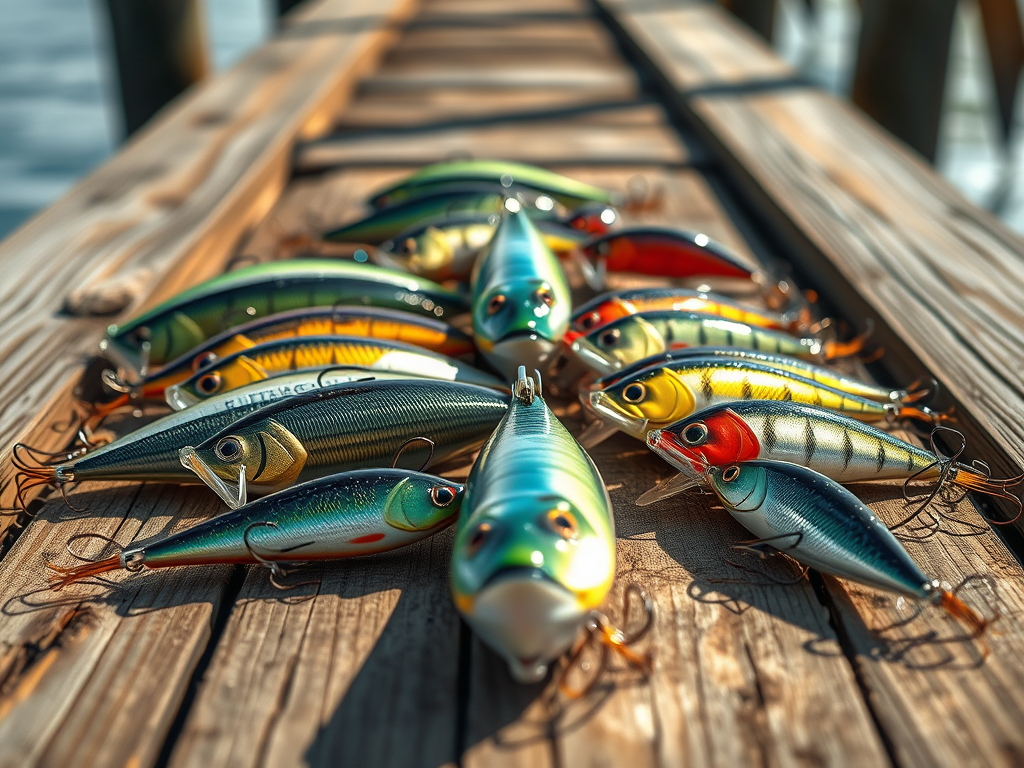
 I Love Fishing